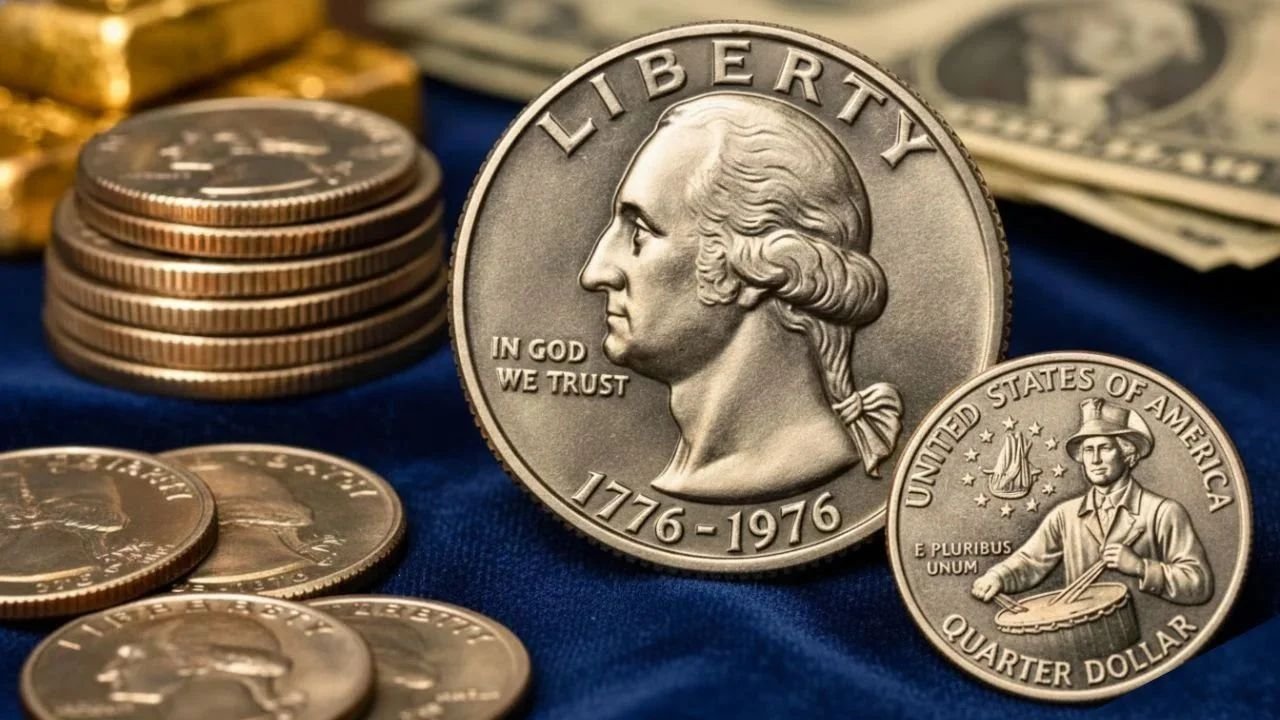
The 1776–1976 Bicentennial Quarter is more than just spare change—it is a symbol of history, celebration, and, in certain cases, unexpected financial opportunity. Recognized instantly by its dual date and distinctive reverse design, this coin marked a defining moment in American heritage. While millions remain in circulation, select examples have quietly evolved into desirable collectibles with meaningful value.
In 2026, the market for Bicentennial Quarters continues to attract both seasoned collectors and modern investors. The key lies in understanding which coins are ordinary—and which may hold premium worth.
A Historic Coin with Lasting Appeal
Issued to commemorate 200 years since the United States Declaration of Independence, the Bicentennial Quarter represents a rare departure from standard coin design.
On the obverse, the familiar portrait of George Washington remains, accompanied by the dual date “1776–1976.” The reverse, designed by Jack L. Ahr, features a colonial drummer boy alongside a torch encircled by 13 stars—symbolizing the original American colonies.
An important detail often overlooked: no quarters were dated 1975. All coins struck during both 1975 and 1976 carry the Bicentennial date, making them instantly recognizable.
Are Bicentennial Quarters Actually Rare?
With a mintage exceeding 1.6 billion coins, most Bicentennial Quarters are common. The majority found in everyday circulation are worth exactly 25 cents.
However, rarity in coin collecting is not defined by age alone. Instead, value depends on three critical factors:
Composition
Whether the coin is standard clad or silver significantly impacts its base value.
Condition
High-grade coins with minimal wear can command substantial premiums.
Mint Errors
Production anomalies create unique variations that collectors actively seek.
When these factors align, a seemingly ordinary quarter can become a valuable asset.
The 40% Silver Bicentennial Quarter
Beyond standard copper-nickel coins, the United States Mint released special 40% silver versions specifically for collectors. These were never intended for general circulation and were sold in commemorative sets.
How to Identify Silver Versions
- Edge appearance: Solid silver color with no visible copper stripe
- Weight: Slightly heavier than clad versions
- Mint mark: Typically struck in San Francisco
Even in circulated condition, these coins carry intrinsic value due to their silver content. In higher grades or proof condition, values typically range from modest premiums to significantly higher amounts for exceptional examples.
Rare Errors That Drive Real Value
Where true opportunity lies is in mint errors. These anomalies, created during production, transform standard coins into unique collectibles.
Doubled Die Errors
A doubled die occurs when the design is impressed multiple times onto the die, creating visible duplication.
Collectors examine areas such as:
- The date
- “LIBERTY”
- “IN GOD WE TRUST”
- Reverse inscriptions
Clear, well-defined doubling—rather than slight blurring—can significantly increase value, especially in higher grades.
Off-Center Strikes
Off-center strikes occur when the coin blank is misaligned during minting. The result is a partially missing design, often leaving a blank crescent-shaped area.
The more dramatic and balanced the misalignment, the more desirable the coin becomes.
Wrong Planchet Errors
Among the rarest and most valuable errors are coins struck on the wrong planchet—metal blanks intended for other denominations.
For example, a Bicentennial Quarter struck on a dime planchet will appear smaller and lighter than expected. These rare pieces can command impressive auction results due to their uniqueness.
Why Condition Matters More Than You Think
In numismatics, condition can transform value dramatically.
Coins are graded on a standardized scale, with Mint State (MS) representing coins that show no wear. High-grade examples—especially MS65 and above—are highly sought after.
What Defines a High-Grade Coin?
- Strong original luster
- Sharp design details
- Minimal contact marks
- No visible wear
Certified high-grade Bicentennial Quarters have achieved impressive prices at auction, particularly when demand among advanced collectors intensifies.
Proof coins, struck with specially prepared dies, also command higher premiums due to their superior finish and limited production.
Market Trends in 2026
The Bicentennial Quarter continues to perform well in the collector market, driven by a blend of accessibility and historical significance.
Three key factors are sustaining demand:
- Cultural relevance: A widely recognized symbol of American history
- Entry-level appeal: Accessible to new collectors while still offering upside potential
- Tangible asset value: Silver variants provide intrinsic worth
As interest in physical assets grows, coins like the Bicentennial Quarter are gaining renewed attention among investors seeking diversification.
Quick Identification Checklist
If you come across a 1776–1976 quarter, consider the following:
- Does the edge appear fully silver without a copper stripe?
- Is the coin in unusually pristine condition?
- Are there visible doubling effects on letters or numbers?
- Does the design appear off-center or irregular?
- Is there an “S” mint mark indicating San Francisco origin?
If any of these apply, the coin may warrant further evaluation.
Protecting and Maximizing Value
Proper handling is essential when dealing with collectible coins.
Avoid Cleaning
Cleaning may seem beneficial but can permanently damage the coin’s surface and reduce its value.
Store Carefully
Use protective holders or archival-quality cases to prevent environmental damage.
Seek Professional Grading
Authentication and grading by trusted organizations such as the Professional Coin Grading Service or the Numismatic Guaranty Company can significantly enhance credibility and marketability.
Sell Strategically
Rare coins often achieve the highest prices through reputable auction platforms or established numismatic dealers.
Final Thoughts
The 1776–1976 Bicentennial Quarter is far more than a commemorative coin—it is a gateway into the world of collecting, history, and potential financial upside.
While most examples remain worth face value, silver editions, high-grade specimens, and rare error varieties continue to attract serious attention in 2026. The difference between ordinary and valuable often comes down to subtle details that many overlook.
Before you spend your next Bicentennial Quarter, take a closer look. Within that small piece of metal could be a piece of history—and possibly a hidden opportunity waiting to be discovered.