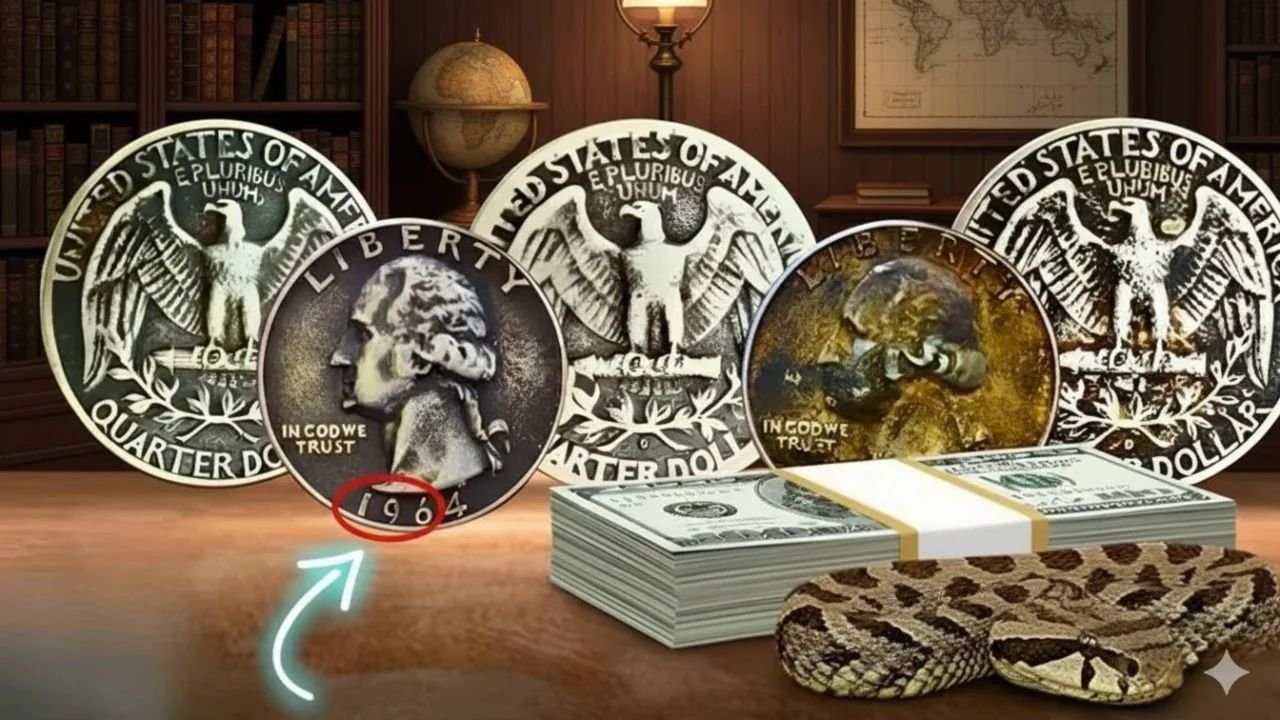
For over nine decades, the Washington quarter has been a staple of American currency. First issued in 1932 to commemorate George Washington’s 200th birthday, it has quietly passed through billions of hands. Yet beyond its everyday role, certain Washington quarters have become highly prized collectibles, commanding thousands—or even tens of thousands—of dollars. Understanding what distinguishes an ordinary quarter from a rare treasure can reveal both financial opportunity and a deeper appreciation for American numismatics.
A Commemorative Coin That Became a Classic
The Washington quarter was initially designed by John Flanagan as a one-year commemorative issue. Its success transformed it into a permanent design, replacing the Standing Liberty quarter. From 1932 through 1964, these quarters were struck in 90% silver, adding intrinsic value beyond face denomination. After 1965, the Mint switched to copper-nickel clad, making earlier silver examples especially desirable to collectors.
The Crown Jewels: 1932-D and 1932-S
1932-D Quarter
Minted in Denver with only 436,800 pieces, the 1932-D is the key Denver date of the series. Many circulated heavily during the Great Depression, making high-grade examples scarce. Even well-worn coins command strong premiums, while uncirculated specimens can reach five-figure sums at auction.
1932-S Quarter
Produced at the San Francisco Mint, only 408,000 coins were struck. Survival rates in top condition are low, elevating demand among collectors. Securing both 1932-D and 1932-S quarters is considered a major milestone for any serious Washington quarter collection.
Silver Quarters: Built-In Precious Metal Value
All Washington quarters minted from 1932 through 1964 contain 90% silver, giving them intrinsic bullion value. Even common-date coins typically exceed face value due to their silver content. Exceptional condition or low-mintage dates can command substantial numismatic premiums, making pre-1965 quarters both historically significant and financially appealing.
Error Coins That Command Premium Prices
Mint errors create accidental rarities highly sought by collectors.
- 1950-D/S Overmintmark: A die originally punched with an “S” was repunched with a “D,” leaving the underlying “S” faintly visible.
- 1965 Silver Transitional Error: During the shift from silver to clad, a few quarters were struck on leftover silver planchets, commanding prices sometimes above $10,000.
- 2004 Wisconsin “Extra Leaf” Quarter: Part of the State Quarters program, certain coins feature a “High Leaf” or “Low Leaf” variant on the corn design, demonstrating that valuable discoveries still appear in modern circulation.
High-Grade Condition: The Silent Multiplier
Condition dramatically influences a coin’s value. Coins are graded on a 1–70 scale, and even a small difference can multiply worth exponentially. Key dates like the 1932-D and 1932-S see the largest premiums in pristine Mint State condition. Professional grading services authenticate and encapsulate coins, enhancing both credibility and market liquidity.
Bicentennial and Modern Series: Hidden Upside
The 1976 Bicentennial quarter, featuring a colonial drummer on the reverse, remains collectible, especially in silver-clad proof versions or high-grade examples. Later programs, including the 50 State Quarters (1999–2008) and America the Beautiful Quarters (2010–2021), introduced new collectors to the hobby. While most modern coins are common, proof errors, low-population high-grade pieces, and unique varieties still attract attention. Modern collecting now emphasizes scarcity and certified quality over age alone.
What Drives Washington Quarter Value?
Several factors determine whether a quarter is ordinary or exceptional:
- Low Mintage: Scarcer coins are naturally more valuable.
- Condition: High-grade, uncirculated specimens command strong premiums.
- Mint Errors: Varieties and production mistakes multiply value.
- Silver Content: Pre-1965 coins carry intrinsic bullion worth.
- Collector Demand: Registry competition and market trends influence pricing.
When multiple factors converge—such as a low-mintage coin in pristine condition—values can escalate dramatically.
Smart Strategies for Collectors
Building a valuable Washington quarter collection requires patience and research.
- Date-and-Mintmark Sets: Aim to acquire one coin from each year and mint location.
- Silver-Era Focus: Pre-1965 quarters combine intrinsic and numismatic value.
- Coin Roll Hunting: Searching bank rolls for older coins remains a cost-effective method.
- Auctions and Dealers: Estate sales, certified auctions, and reputable dealers provide access to rare finds.
- Education: Understanding grading, authentication, and market trends protects both investment and enjoyment.
More Than Pocket Change
The Washington quarter is an accessible entry point into serious numismatics. It bridges everyday life and high-end collecting in a unique way. Silver edges, historic mintmarks, and rare error varieties can transform ordinary coins into significant assets.
Beyond monetary value, each quarter represents a moment in American history—from the Great Depression to modern commemorative programs. The Washington quarter is more than 25 cents. It is history struck in metal, quietly waiting to be rediscovered—and occasionally worth far more than anyone expects.