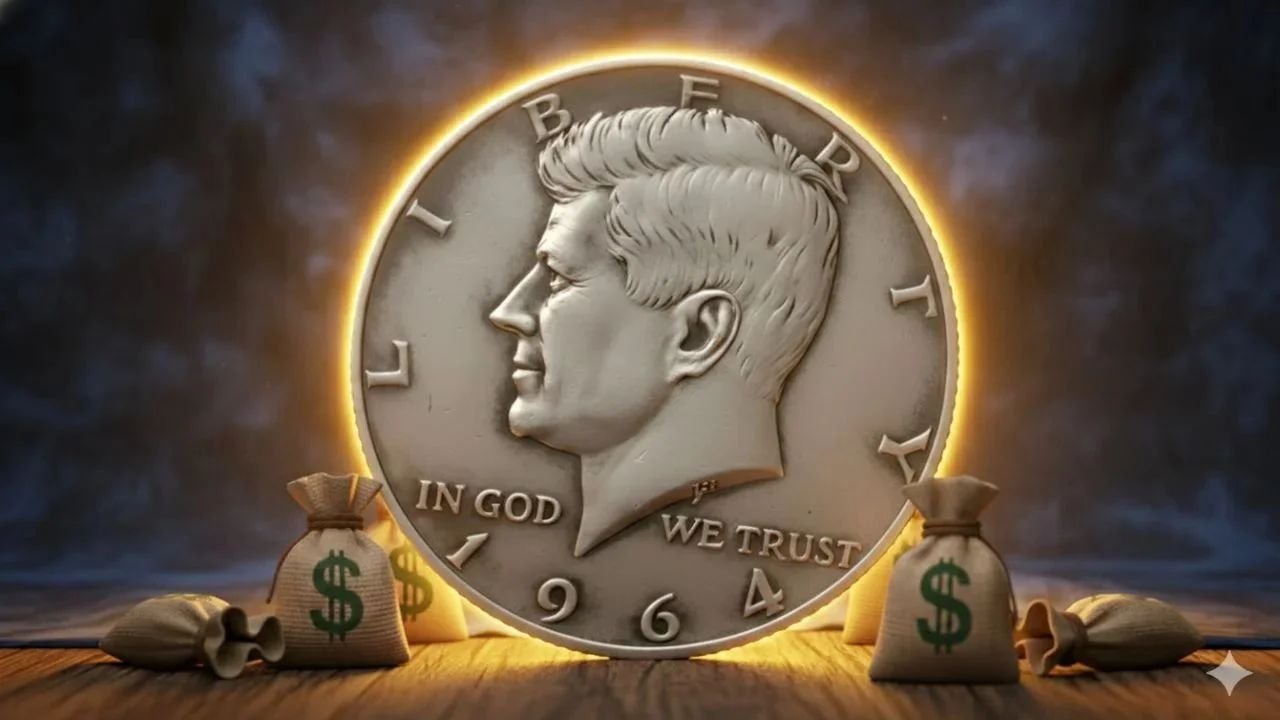
The 1976 “Drummer Boy” Quarter is instantly recognizable to millions of Americans. Struck to commemorate the nation’s 200th anniversary, it blends patriotic symbolism with everyday accessibility. While nearly everyone has handled one in circulation, headlines occasionally claim that a Bicentennial Quarter sold for $550,000. Is this realistic, or simply a market exaggeration? This guide separates fact from fiction, explaining what truly makes certain 1976 quarters valuable and how collectors can evaluate their own coins.
The Story Behind the Bicentennial Quarter
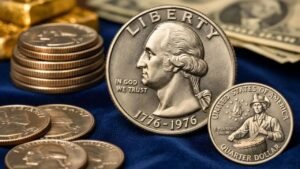
To celebrate America’s 200th birthday, the United States Mint redesigned the quarter, half dollar, and dollar. The Bicentennial Quarter keeps John Flanagan’s familiar portrait of George Washington on the obverse. The reverse, designed by Jack L. Ahr, depicts a colonial drummer standing beside a victory torch encircled by thirteen stars, representing the original colonies.
All Bicentennial quarters carry the dual date “1776–1976.” Although minted in both 1975 and 1976, none bear the 1975 date. Massive production ensured widespread circulation, making the coin common in everyday change.
How Many Were Minted?
The Bicentennial Quarter was struck at three locations:
- Philadelphia (no mint mark)
- Denver (“D” mint mark)
- San Francisco (“S” mint mark for proofs and silver issues)
Over 1.6 billion copper-nickel clad quarters were produced for circulation, along with approximately 11 million 40% silver collector versions. With such high mintage, rarity comes not from age but from composition, condition, or mint errors.
Clad vs. Silver: Composition Matters
Most Bicentennial quarters are copper-nickel clad, weighing 5.67 grams, and remain common. The San Francisco Mint also produced 40% silver versions for collectors, slightly heavier at 5.75 grams.
How to identify silver:
- Clad coins: copper stripe along the edge
- Silver coins: solid silver-colored edge
40% silver examples typically trade between $8 and $25, while high-grade proof coins can exceed $50.
The Truth About the $550,000 Claim
There is no widely documented, verified public auction record of a standard Bicentennial Quarter selling for $550,000. For a quarter to reach such a level, it would require:
- A dramatic mint error
- An experimental strike
- Wrong-metal composition
- Extraordinary provenance
- Perfect condition tied to unique registry demand
In established numismatic markets, even exceptional Bicentennial quarters usually trade in the hundreds or low thousands, not hundreds of thousands. Sensational headlines often exaggerate theoretical anomalies.
What Actually Makes a 1976 Quarter Valuable?
While $550,000 is unrealistic for most coins, several factors can significantly increase value:
High Mint State Grades
Uncirculated quarters graded MS-67 or higher by PCGS or NGC command strong premiums. Top-population registry coins may sell for hundreds or a few thousand dollars.
40% Silver Proofs
Silver proofs from San Francisco, especially with Deep Cameo contrast, remain desirable. Perfect PR-70 examples carry substantial premiums over standard proofs.
Major Mint Errors
Exceptional Bicentennial errors include:
- Off-center strikes (40%+ displacement)
- Double die errors with clear separation
- Clipped planchets
- Missing clad layer errors
- Wrong planchet strikes
Values range from $200 to several thousand dollars depending on rarity and eye appeal.
Exceptional Eye Appeal
Coins with vibrant toning, strong luster, and flawless surfaces often outperform standard examples in competitive auctions.
Realistic Value Chart (2026 Market Overview)
- Circulated Clad Quarter: $0.25–$2
- Uncirculated Clad (MS63–MS65): $3–$25
- High-Grade Clad (MS67+): $100–$1,000+
- 40% Silver (Raw): $8–$25
- Silver Proof (High Grade): $25–$100+
- Major Error Coins: $200–$5,000+
Values depend heavily on authentication and market demand.
How to Evaluate Your Bicentennial Quarter
Collectors should take these steps:
- Inspect the edge for silver composition
- Check the mint mark—right of Washington’s ponytail ribbon
- Examine surfaces under 10x magnification
- Look for strong doubling or dramatic strike anomalies
- Never clean the coin
- Consider professional grading for high-grade or error specimens
The Enduring Appeal of the Drummer Boy Design
Beyond viral headlines, the 1976 Drummer Boy Quarter remains beloved for its historical symbolism. It marks the first nationwide redesign of circulating coinage for a milestone anniversary. For many collectors, the coin’s emotional and historical significance outweighs its monetary value. It serves as an accessible entry point into numismatics, where history, design, and precision manufacturing intersect.
Final Thoughts
The $550,000 claim makes for exciting reading, but serious collectors understand the difference between possibility and probability. Most 1976 quarters are common and worth face value. However, high-grade silver proofs and authentic mint errors can deliver meaningful premiums. The key is education, careful inspection, and realistic expectations. Focusing on verified auction records, certified grading, and authenticated varieties turns curiosity into strategy—transforming everyday coins into informed collecting opportunities.