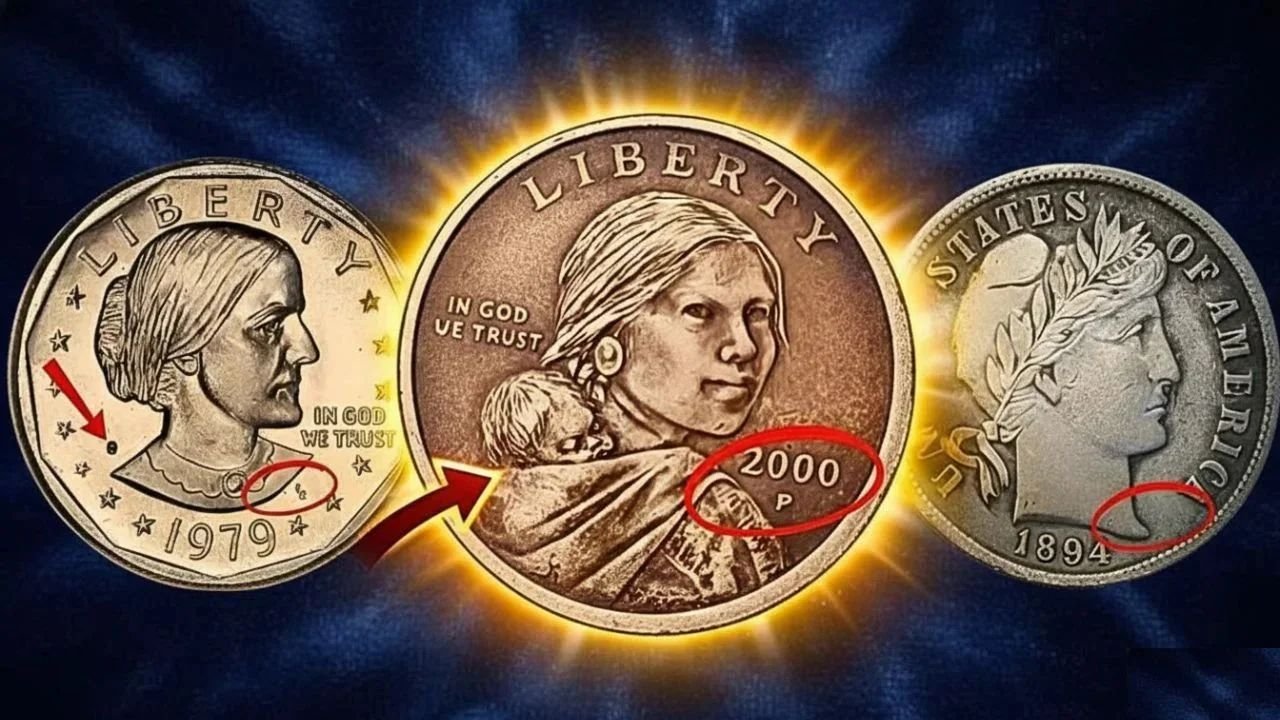
In the world of high-end collectibles, few assets blend history, artistry, and extraordinary financial upside like rare American coins. While most pocket change holds only face value, a select group of U.S. coins has reached multimillion-dollar status at global auctions. For the fortunate few who discover one—through inheritance, estate sales, or sheer luck—the outcome can be life-changing.
These are not merely coins. They are financial artifacts, cultural milestones, and, in some cases, the rarest surviving symbols of America’s early monetary system. Here’s a closer look at three of the most valuable U.S. coins ever produced—each capable of redefining what a small piece of metal can be worth.
The 1794 Flowing Hair Dollar – The Birth of American Silver
The 1794 Flowing Hair Dollar is widely regarded as the first silver dollar struck by the United States Mint. Beyond currency, it represents the young nation’s declaration of economic independence.
Struck during George Washington’s presidency, the coin features Lady Liberty with flowing hair on the obverse and a small eagle on the reverse—one of the earliest artistic expressions of American sovereignty.
Why It’s So Valuable:
- First official U.S. silver dollar
- Extremely low surviving population in high grade
- Monumental historical significance
Although roughly 1,700 were minted, experts estimate that only 120–140 examples survive in any condition, with far fewer in exceptional preservation. A nearly pristine specimen sold in 2013 for over $10 million, placing it among the most expensive coins ever auctioned. Today, high-grade examples are valued between $5 million and $12+ million, depending on condition and provenance. Owning one is akin to holding the financial birth certificate of the United States.
The 1804 Silver Dollar – The King of American Coins
The 1804 Silver Dollar carries a date suggesting early 19th-century production, but most known examples were actually struck between 1834 and 1835 as diplomatic presentation pieces. Never intended for circulation, these coins were gifts for international missions, adding to their mystique and rarity.
Only 15 examples are known across all classes, making it one of the most coveted coins in numismatic history.
What Makes It Legendary:
- Created as official diplomatic gifts
- Ultra-low survival rate
- Iconic status in elite collections
Dubbed “The King of American Coins,” the 1804 Silver Dollar commands prices between $3 million and $6+ million at auction. Its rarity, intrigue, and global recognition ensure sustained demand among advanced collectors and institutional buyers.
The 1933 Double Eagle – The Coin That Was Never Meant to Exist
Few coins combine legal drama and aesthetic mastery like the 1933 Double Eagle. Designed by Augustus Saint-Gaudens, it is widely regarded as the most beautiful coin produced by the U.S. Mint. However, the 1933 issue was never officially released for circulation.
Amid the Great Depression, the government abandoned the gold standard, and nearly all 1933 Double Eagles were ordered melted. A tiny number, however, survived, entering private hands under exceptional circumstances.
Why Collectors Call It the Ultimate Prize:
- Never officially circulated
- Most examples destroyed
- Legal and historical intrigue
Today, only a handful are legally owned privately. One example sold for nearly $19 million in a landmark auction, making it one of the most valuable coins ever sold. High-grade specimens typically range from $8 million to $18+ million when available. This coin sits at the intersection of art, law, and finance, representing a pivotal moment in American economic history.
What Drives Multimillion-Dollar Coin Values?
These coins are exceptional, but their value is determined by factors that apply across elite numismatics:
- Extreme Scarcity: Fewer examples mean intense competition among collectors, creating long-term price resilience.
- Historical Significance: Coins linked to pivotal events, such as early federal minting or the end of the gold standard, carry lasting cultural weight.
- Condition and Preservation: Professional grading by services like PCGS and NGC ensures authentication, encapsulation, and market confidence.
- Provenance: Documented ownership history, especially involving notable collectors or landmark sales, can significantly elevate value.
Could You Actually Find One?
Discovering one of these three coins in circulation is extraordinarily unlikely. Yet important rarities continue to surface in inherited collections, estate sales, and forgotten safe deposit boxes. History demonstrates that remarkable finds do still happen.
Education is key. Understanding dates, mint marks, metal compositions, and known rarities allows collectors to spot value others may overlook. Even coins short of multimillion-dollar status can command six- or seven-figure prices in the right condition.
How to Protect a High-Value Coin
If you believe you’ve discovered a rare coin:
- Do not clean it
- Handle only by the edges
- Store in a protective holder
- Seek professional authentication immediately
Improper handling can permanently reduce value, underscoring the importance of disciplined preservation.
A Final Perspective on Wealth in Small Form
Rare coins occupy a unique niche in the alternative asset world. They are portable, finite, historically grounded, and globally recognized. Unlike speculative investments, their appeal spans generations of collectors, historians, and investors.
The 1794 Flowing Hair Dollar, the 1804 Silver Dollar, and the 1933 Double Eagle are not just coins—they are financial legends forged in metal. For most of us, they remain museum-level treasures. But for the rare individual who encounters one unexpectedly, the discovery could indeed redefine retirement itself.
Sometimes, extraordinary wealth arrives in the smallest possible form.