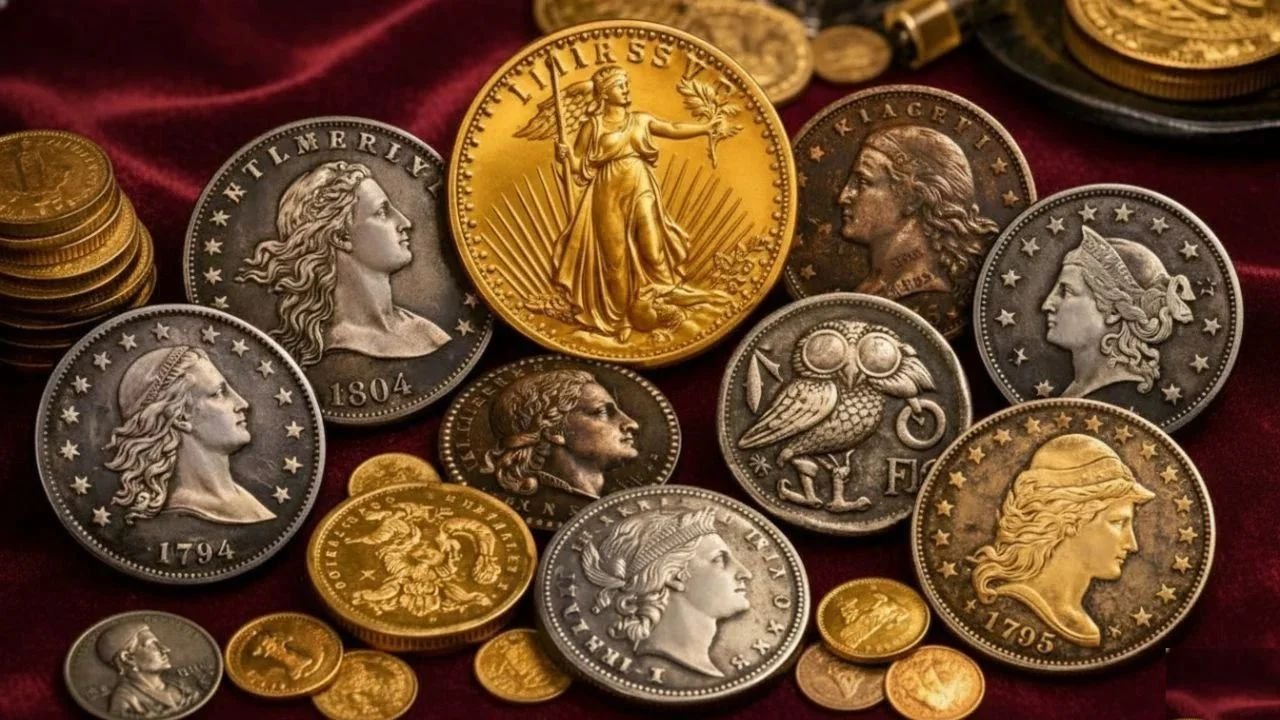
In 2026, the rare coin market continues to captivate elite collectors and sophisticated investors worldwide. Beyond their metal content, these coins carry history, artistry, and scarcity that elevate them into the highest echelons of alternative assets. From early American patterns to European rarities, each piece tells a story while offering substantial financial upside.
1. 1933 Double Eagle
The 1933 Double Eagle embodies financial drama and historical intrigue. Minted during the Great Depression, these $20 gold coins were never officially released after the United States abandoned the gold standard under President Franklin D. Roosevelt.
Most were melted down, leaving only a handful in private hands. Legal battles over ownership and provenance have cemented its status as one of the most valuable coins globally, with auction prices frequently exceeding $15–20 million.
Key Value Drivers:
- Extreme rarity
- Government recall history
- Legal and political significance
- Elite auction demand
2. 1794 Flowing Hair Dollar
Recognized as the first silver dollar struck by the United States Mint, the 1794 Flowing Hair Dollar represents the birth of American federal coinage. Its youthful Liberty design exemplifies early national identity and craftsmanship.
High-grade examples are exceedingly rare, with one specimen famously surpassing $10 million at auction. Collectors prize it for its historical primacy and symbolic significance.
3. 1913 Liberty Head Nickel
Only five examples of the 1913 Liberty Head Nickel are known. Struck after the official replacement of the Liberty Head design, its unauthorized production remains a mystery, adding to its legend.
Each coin has a documented ownership history and has consistently sold for $4–5 million or more, making it one of the most celebrated rarities in American numismatics.
4. 1894-S Barber Dime

The 1894-S Barber Dime is renowned for its minuscule mintage of just 24 coins, with fewer than 10 confirmed survivors. Likely struck for bankers or internal purposes, its scarcity drives valuations into the multi-million-dollar range.
Collectors prize its combination of rarity, small denomination, and historical intrigue, demonstrating that even minor coins can achieve extraordinary status.
5. Brasher Doubloon
Before the United States had an official mint, goldsmith Ephraim Brasher produced gold coins in New York. His 1787 doubloon, stamped with the distinctive “EB” hallmark, is considered one of the earliest U.S.-associated gold coins.
Its historical significance and extreme scarcity push auction prices well above $9 million, reflecting both numismatic and cultural value.
6. 1343 Edward III Florin
The 1343 Edward III Florin, also known as the Double Leopard, is among the rarest medieval coins. Only three examples are known, making it a prized collector’s artifact. Its age, historical context, and early gold coinage experimentation cement its significance in European numismatics.
7. 1804 Draped Bust Dollar
Known as the “King of American Coins,” the 1804 Draped Bust Dollar was minted decades after its date as diplomatic presentation pieces. Only 15 Class I examples exist, commanding top-tier valuations exceeding $7 million. Its combination of artistry, rarity, and historical narrative makes it a cornerstone for elite collectors.
8. 2007 Queen Elizabeth II Million Dollar Coin
Issued by the Royal Canadian Mint, this 100-kilogram gold coin carries a face value of one million Canadian dollars. Despite being modern, its immense gold content and limited production elevate it to ultra-luxury status. Individual coins have sold for multiple millions above face value, appealing to both bullion investors and high-net-worth collectors.
9. 1822 Capped Bust Half Eagle
The $5 gold 1822 Capped Bust Half Eagle is extremely scarce, with only three known examples. Two reside permanently in the Smithsonian Institution, leaving a single specimen for private collectors. Its rarity, combined with historical significance, drives auction prices beyond $8 million.
10. 1792 Birch Cent
The 1792 Birch Cent predates regular federal copper coinage, serving as an experimental pattern. Its Liberty portrait, pattern status, and historical importance make it a foundational artifact of American numismatics. With only a handful surviving, it remains one of the earliest and most collectible U.S. coins.
What Drives Multi-Million Dollar Coin Values?
Ultra-rare coins derive their value from a combination of factors:
- Surviving Population: Few examples in collectible condition increase demand exponentially.
- Historical Context: Coins tied to economic transitions, political events, or early nation-building command premium interest.
- Provenance: Documented ownership history enhances prestige and liquidity at auction.
- Condition and Grading: Professional grading from elite services significantly affects valuation; a single grade difference can equate to millions.
Rare Coins as an Investment in 2026
High-end numismatics has matured into an alternative asset class. Rare coins provide:
- Portfolio diversification
- Tangible asset security
- Inflation resilience
- Access to global auction liquidity
While financial upside is enticing, true collectors often value the intellectual reward of preserving history. Successful investing requires working with reputable dealers, certified grading services, and trusted auction houses.
The Enduring Allure of Numismatic Legacy
Rare coins are not merely commodities—they are physical connections to centuries of human ambition, artistry, and economic experimentation. In an increasingly digital financial world, tangible historical assets retain unique appeal.
For elite collectors, owning a coin from this list is more than an investment—it is stewardship. Preserving a piece of civilization ensures that future generations can hold, study, and marvel at history in their hands.